The Integration Trap
OpenAI's simultaneous push into vertical integration and plugin architecture reveals the fundamental tension between control and ecosystem growth that will reshape AI development tools
Most people think OpenAI’s acquisition of Astral is just another tech company buying useful tools. They’re missing the real story. This isn’t about adding features, it’s about redefining where the platform ends and the ecosystem begins.
The conventional wisdom says platforms either integrate everything or stay open to partners. Pick a lane. But OpenAI is doing something more interesting: they’re running both strategies simultaneously. They’re bringing Astral’s Python tools directly under Codex while launching a plugin system for third-party developers. That’s not indecision, it’s a signal about how AI development platforms will actually work.
Here’s what I think is happening. OpenAI has figured out that developer tools exist in layers, and different layers have different strategic value. The bottom layer, core language tooling, build systems, package managers needs to be fast, reliable, and deeply integrated with the AI’s reasoning. You can’t afford latency or compatibility issues when the AI is manipulating your dependency graph or optimizing your build pipeline.
The top layer, specialized workflows, domain-specific tools, experimental features benefits from diversity and rapid iteration. This is where you want a thousand flowers blooming, not a single integrated solution.
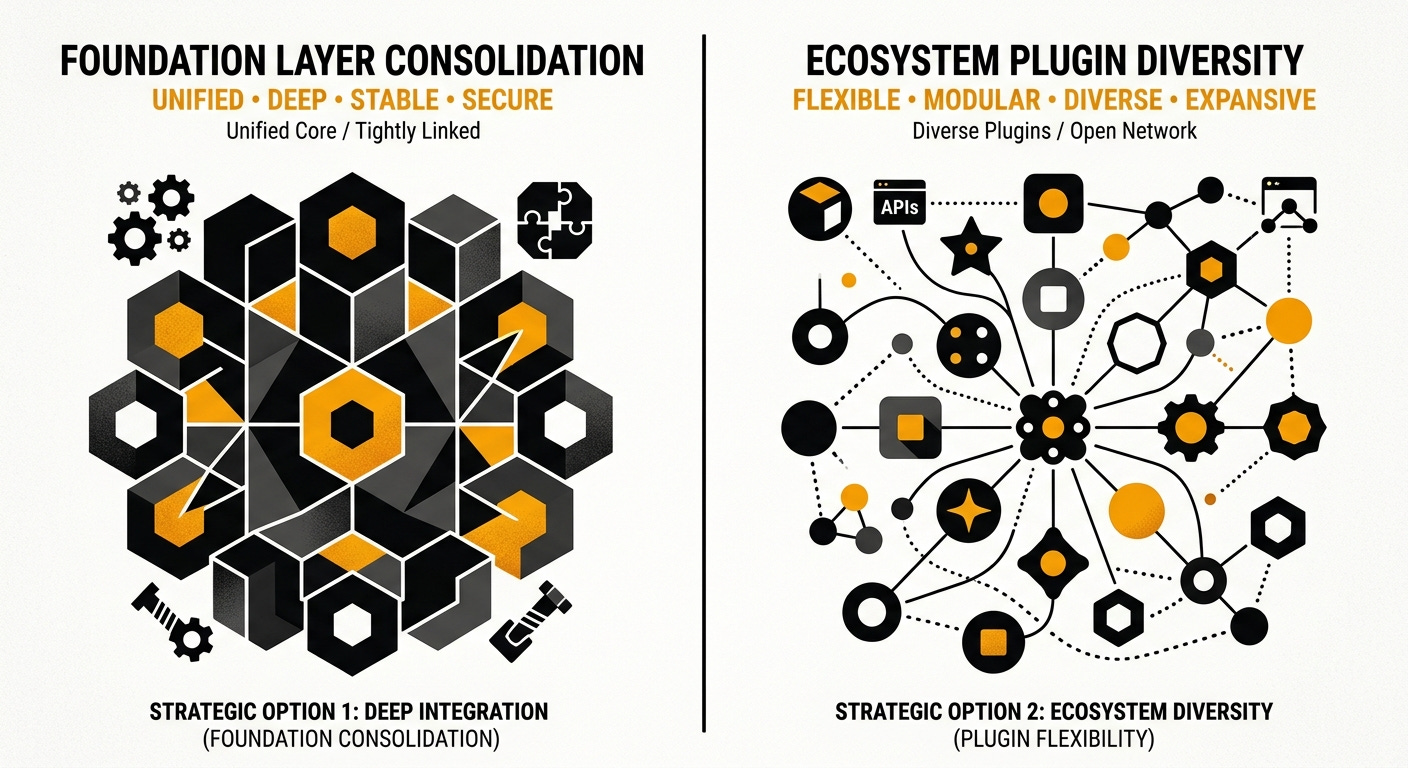
The Astral acquisition makes sense through this lens. Python tooling sits at the foundation layer. When an AI agent is restructuring your codebase or optimizing imports, you need that integration to be seamless. Having uv and Ruff as external plugins introduces friction that compounds across every interaction.
But here’s the part that most third-party tool companies are getting wrong: they think this creates a binary outcome where either OpenAI integrates everything or they’re safe in the plugin ecosystem. The reality is more nuanced.
The companies that will thrive are those building tools that are genuinely complementary to core AI capabilities, not just wrappers around them. If your tool’s main value is “ChatGPT but for X,” you’re probably in the integration blast radius. If your tool does something that requires deep domain expertise or novel data sources, the plugin model works in your favor.
In the work we do at Voxdez, I keep seeing teams make the same mistake: they treat AI development tools like traditional software, where owning the interface means owning the relationship. But AI tools are different. The value isn’t in the interface, it’s in the reasoning and the context that flows between tools.
This is why OpenAI’s hybrid approach actually makes sense for developers, even if it’s uncomfortable for tool vendors. You want your foundational tools to be deeply integrated because that’s where you need reliability and performance. You want your specialized tools to be pluggable because that’s where you need choice and innovation.
The real question isn’t whether OpenAI will integrate more tools, they will. The question is where they draw the line between “foundational” and “specialized.” And that line will move as AI capabilities improve.
Right now, Astral’s Python tools are clearly foundational. But what about debugging? Testing? Deployment? These feel foundational today, but they might become specialized as AI systems get better at end-to-end software development.
The tool companies that survive will be those that either: 1) build something so specialized that integration doesn’t make sense, or 2) build something so valuable that they become an acquisition target before they become a competitive threat.
The ones that won’t survive are those building general-purpose productivity wrappers around existing AI models. Those are exactly the kinds of tools that platforms want to own directly.
This creates an interesting dynamic for developers. In the short term, you’ll probably get the best of both worlds: tightly integrated core tools and a rich ecosystem of specialized plugins. In the long term, as the integration layer expands, you’ll have fewer choices about your foundational tools but more innovation in specialized areas.
The parallel to mobile platforms is obvious but instructive. Apple owns the core OS and development tools, but there’s still a thriving ecosystem of specialized developer apps. The difference is that AI development moves faster and the boundaries between core and specialized are more fluid.
For teams adopting these tools today, the implication is clear: bet on the plugin ecosystem for anything that’s not directly in your critical path, but expect the foundational layer to consolidate around a few major platforms.
The companies that understand this layered approach will build sustainable businesses. The ones that don’t will find themselves competing directly with platform features, which is rarely a winning strategy. If you don’t know if that’s you and need help figuring out, let me know.
What’s happening isn’t consolidation, it’s stratification. And the sooner tool companies figure out which layer they’re actually playing in, the better their chances of building something that lasts.